
When people think of medical transportation, they often picture ambulances responding to emergencies with lights and sirens. However, every day, Non-Emergency Medical Transportation (NEMT) drivers play a vital role in helping patients safely travel between homes, hospitals, rehabilitation centers, dialysis appointments, medical appointments, and long-term care facilities.
Behind every transport is a dedicated professional focused on safety, compassion, communication, and patient care. Here’s a closer look at what a typical day in the life of a NEMT driver looks like.
Starting the Day with Safety First
Before the first patient is ever loaded into the vehicle, the day begins with a thorough vehicle inspection.
NEMT drivers complete a detailed pre-trip check to ensure the vehicle is safe and ready for service. This includes inspecting:
- Tires and brakes
- Lights and signals
- Fuel levels
- Oxygen tank levels
- Stretcher and wheelchair securement systems
- Vehicle cleanliness and sanitation
- Camera health
These inspections are critical because patient safety starts long before the transport begins. A properly maintained vehicle helps prevent delays, breakdowns, and safety concerns throughout the day.
Building Trust Through Patient Interactions
For many patients, transportation can be stressful. Some may be recovering from surgery, managing chronic illnesses, attending routine treatments, or experiencing mobility limitations.
One of the most important parts of a NEMT driver’s job is helping patients feel comfortable and respected.
Drivers often:
- Greet patients with a friendly, reassuring attitude
- Assist with boarding and exiting the vehicle
- Listen to patient concerns
- Keep patients informed about safety steps and the transport process
- Help reduce anxiety through professional and compassionate communication
For some patients, their transportation team may be one of the most familiar faces they see throughout the week. A caring interaction can significantly improve a patient’s overall healthcare experience.
The Importance of the Red Belt
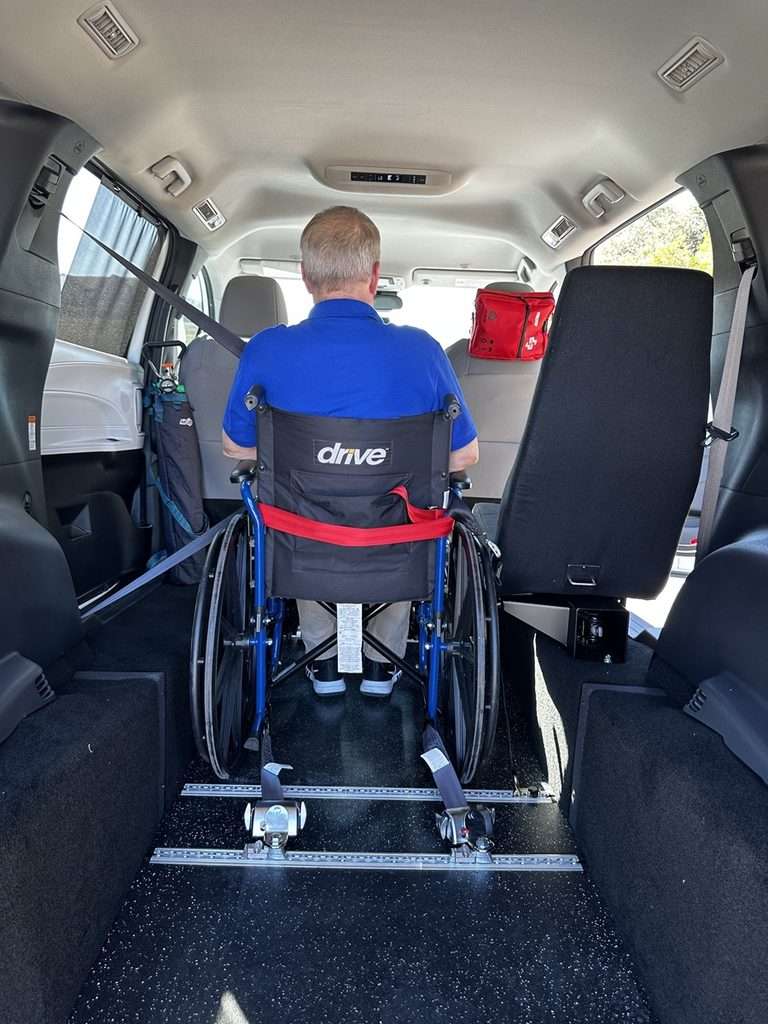
Lone Star Medical Transportation utilizes red belts as part of their daily safety practices. Red belts are specialized safety straps that help keep wheelchair passengers properly positioned and secure throughout every stage of transport. The red belt serves as an additional layer of patient protection, helping keep patients securely positioned during movement and transport.
Red belts play a critical role in wheelchair transportation safety. While many people think of this securement support as added protection during vehicle movement, they are just as important during loading, unloading, and while navigating through healthcare facilities. Frail or medically vulnerable patients can shift or slide forward in their wheelchairs, increasing the risk of falls and injuries. When properly positioned across the chest, the red belts help keep the patient safely seated and supported throughout every stage of the transport process. Combined with proper wheelchair securement, the provide an added layer of protection and peace of mind for patients, caregivers, and transportation professionals alike.
This simple but essential safety measure is another example of the many steps taken to prioritize patient well-being during every trip.
Every Transfer Matters
Loading and unloading a patient is never treated as a routine task.
When transporting a patient, drivers carefully evaluate each situation before moving the patient. Factors such as mobility limitations, environmental obstacles, weather conditions, and patient comfort all require careful consideration.
No two transports are exactly alike, which is why experienced NEMT professionals approach every transfer with patience and attention to detail.
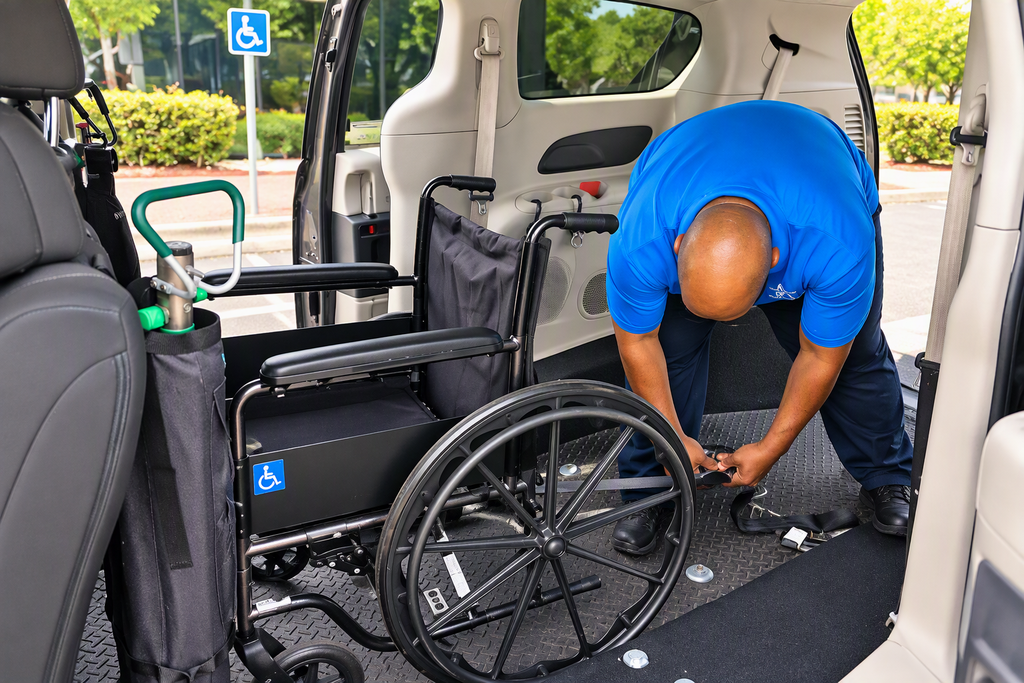
Proper Wheelchair Securement
Once the patient is safely aboard, the next priority is securement. The loading, unloading, and securement process is followed every time because safety is critical. Our vehicles do not hit the road until our transportation technicians are confident the wheelchair and equipment are properly secured and the patient is safe and comfortable for transport.
This includes:
- Verifying all locking mechanisms are engaged
- Using approved tie-down systems
- Confirming stretcher mounting devices are secure
- Checking securement points before departure
- Rechecking equipment whenever necessary
There are no shortcuts when it comes to securement. Even a short trip requires the same level of attention and care as a longer transport.
Navigating Traffic Safely
While NEMT vehicles do not respond with lights and sirens, drivers still spend much of their day navigating busy roadways.
Defensive driving is a critical part of the job. Drivers must remain alert and anticipate potential hazards while providing a smooth and comfortable ride for patients.
This includes:
- Maintaining safe following distances
- Adjusting for weather and road conditions
- Watching for distracted drivers
- Avoiding sudden stops and sharp turns
- Planning routes to minimize delays
Patients often have medical conditions that make smooth transportation especially important. Every acceleration, turn, and stop is made with patient comfort and safety in mind.
Staying Connected with Dispatch
Communication is constant throughout the day.
Drivers remain in regular contact with dispatch teams to ensure transports stay on schedule and patients receive timely service.
Common communications include:
- Traffic updates
- Route changes
- Facility arrival notifications
- Pickup confirmations
- Schedule adjustments
- Delay notifications
- New transport assignments
This ongoing communication helps create a seamless experience for patients, healthcare facilities, and family members who may be coordinating care.
Working Hand-in-Hand with Healthcare Staff
NEMT drivers regularly interact with nurses, care coordinators, discharge planners, therapists, and facility staff throughout the day.
These partnerships help ensure:
- Accurate transportation details
- Safe patient handoffs
- Timely appointments
- Continuity of care
- Proper documentation transfer
A successful transport often depends on teamwork. Drivers work closely with healthcare professionals to ensure patients arrive at their destinations safely and comfortably.
Adapting to the Unexpected
No two days are ever exactly the same.
Drivers may encounter:
- Construction detours
- Weather-related delays
- Last-minute schedule changes
- Unexpected patient needs
- Facility wait times
The ability to remain calm, flexible, and professional is essential. NEMT drivers constantly adapt while maintaining a focus on safety and customer service.
More Than Transportation
At its core, Non-Emergency Medical Transportation is about much more than moving patients from one location to another.
NEMT drivers help patients access critical healthcare services, maintain independence, attend life-sustaining treatments, and navigate challenging medical journeys. They serve as trusted professionals who combine safe driving practices, attention to detail, compassionate service, and teamwork to make every transport successful.
While the public may not always see everything that happens behind the scenes, a NEMT driver’s day is filled with countless decisions and actions focused on one goal: delivering safe, reliable, and compassionate transportation for every patient, every trip, every day.
Need Dependable Medical Transportation?
Whether it’s wheelchair transportation, stretcher transportation, hospital discharges, dialysis appointments, or long-distance medical trips, our team is committed to providing safe, professional, and compassionate service every step of the way. Contact Lone Star Medical Transportation today to learn how we can help meet your transportation needs.


